Sports gear is no longer judged only by warmth, grip, stretch, or durability. Today’s buyers also need products that work seamlessly with smartphones, GPS devices, and wearable trackers while users are running, cycling, commuting, or working outdoors. Touchscreen-compatible gloves, sleeves, jackets, and accessories have moved from niche upgrades to high-volume procurement requirements, with capacitive functionality now specified in a large share of athletic glove orders. For commercial buyers, the opportunity is significant—but so are the risks. Conductive materials, coating durability, insulation thickness, and wet-weather performance all affect whether a product feels premium or fails in daily use. Understanding these specifications helps brands source smarter and reduce returns.
Market Demand for Touchscreen-Compatible Sports Gear
The integration of mobile technology into athletic and outdoor activities has transformed commercial apparel procurement. Over the past five years, demand for capacitive functionality in handwear, armbands, and jackets with device pockets has surged, transitioning from a niche premium feature to a baseline consumer expectation. According to recent industry supply chain surveys, estimates suggest touchscreen compatibility is now specified in approximately 75% of new athletic glove orders, a stark increase from historical baselines of around 20% a decade ago. This shift reflects a broader consumer reliance on smartphones, GPS units, and biometric smartwatches during physical exertion, prompting buyers to adapt their sourcing strategies to meet these modern usage habits and manage the associated supply chain complexities.
Defining Touchscreen Compatibility for Commercial Buyers
Commercial buyers must distinguish between basic marketing claims and verifiable capacitive performance. Modern capacitive touchscreens rely on the electrical properties of the human body to register input. Therefore, compatible sports gear must effectively bridge the insulating gap between the user’s skin and the device’s screen. In strict procurement terms, engineering analyses show this requires materials with a surface resistance typically below 10^4 ohms per square. Standard insulating fabrics like polyester, fleece, or nylon possess resistance levels far exceeding this threshold, acting as complete insulators. This necessitates the strategic integration of conductive elements at the contact points to ensure a continuous electrical pathway. However, buyers should note inherent limitations: performance can degrade significantly in extreme cold or wet real-world conditions, and thicker insulation naturally reduces touch sensitivity. Furthermore, the lifespan of coating-based products is often much shorter than marketing claims suggest. Without proper technical integration, users cannot operate their devices, leading to immediate product dissatisfaction and high return rates.
Key Market Drivers and Use Cases
The primary catalyst for this shift is the ubiquitous use of mobile applications for navigation, performance tracking, and communication. Cyclists, runners, and winter sports enthusiasts require uninterrupted access to their devices without exposing their skin to adverse weather. Procuring items like smart cycling gloves wholesale demonstrates how retailers are adapting to capture the commuting and recreational markets, where GPS interaction is constant. Furthermore, demand extends well beyond traditional retail into wearable controller integrations and conductive jacket sleeves. Industrial, logistics, and tactical sectors are increasingly adopting these athletic-style wearables for workers operating ruggedized tablets in cold environments, though they may not be suitable as replacements for specialized heavy industrial safety gear. This cross-industry demand solidifies the commercial viability of capacitive sports gear, transforming it into a high-volume staple within global supply chains.
Product Specifications and Material Considerations
Translating market demand into executable purchase orders requires a rigorous understanding of material science, manufacturing specifications, and supplier geographic distribution. Commercial buyers must evaluate how electrical conductivity is achieved without compromising the primary protective and performance functions of the gear, such as thermal regulation, moisture management, and tactile dexterity.
Conductive Fibers, Coatings, Grip, and Insulation
Manufacturers achieve capacitive transfer primarily through two methods: integrating conductive yarns or applying conductive surface coatings. Conductive yarns, typically spun with 5% to 15% silver, copper, or carbon fibers, offer permanent functionality that withstands repeated laundering and severe abrasion. However, procurement teams must weigh these benefits against environmental and ethical sourcing concerns associated with silver and copper mining, as well as supply concentration risks among specialized yarn manufacturers. In contrast, topical conductive liquid treatments are significantly more cost-effective but degrade rapidly over time; textile testing indicates they often lose their electrical efficacy after an estimated 15 to 20 wash cycles. When sourcing products like touch screen sports gloves, buyers must also balance conductivity with insulation and grip. Heavyweight thermal layers can increase the physical distance between the conductive contact point and the user’s skin, potentially dampening the electrical transfer if internal conductive pathways are not meticulously engineered. Additionally, silicone grip patterns applied to the palm and fingers must be designed to avoid overlapping and insulating the critical conductive zones.
Supplier Comparison and Quality Criteria
Evaluating suppliers necessitates comparing their material approaches against intended product lifecycles, geographic concentration risks, and target retail price points. For instance, commercial microfiber touchscreen gloves often utilize carbon-infused synthetic leathers on the palm and fingertips, providing reliable durability and electrical transfer without the need for exposed metallic threads.
| Technology Type | Durability (Wash Cycles) | Relative Cost Impact | Best Commercial Application |
|---|---|---|---|
| Conductive Yarn (Silver/Copper) | High (50+) | Premium (+20-30%) | High-end athletic, winter sports |
| Conductive Surface Coating | Low (15-20) | Economical (Baseline) | Fast fashion, light recreation |
| Carbon-Infused Synthetic Leather | Medium-High (30-40) | Moderate (+10-15%) | Cycling, tactical, heavy-duty |
Quality control criteria should mandate standardized testing for touch responsiveness across multiple device types, including both iOS and Android platforms. Furthermore, suppliers must prove compatibility with common aftermarket screen protectors, such as 0.33mm tempered glass and standard PET films, before mass production is authorized.
Sourcing, Qualification, and Scaling
Scaling the production of tech-enabled athletic gear introduces specific supply chain vulnerabilities that standard apparel procurement does not face. The addition of conductive materials requires specialized manufacturing equipment and stringent quality assurance protocols to prevent high defect rates during the final assembly and packaging phases.
Procurement Steps for Supplier Evaluation
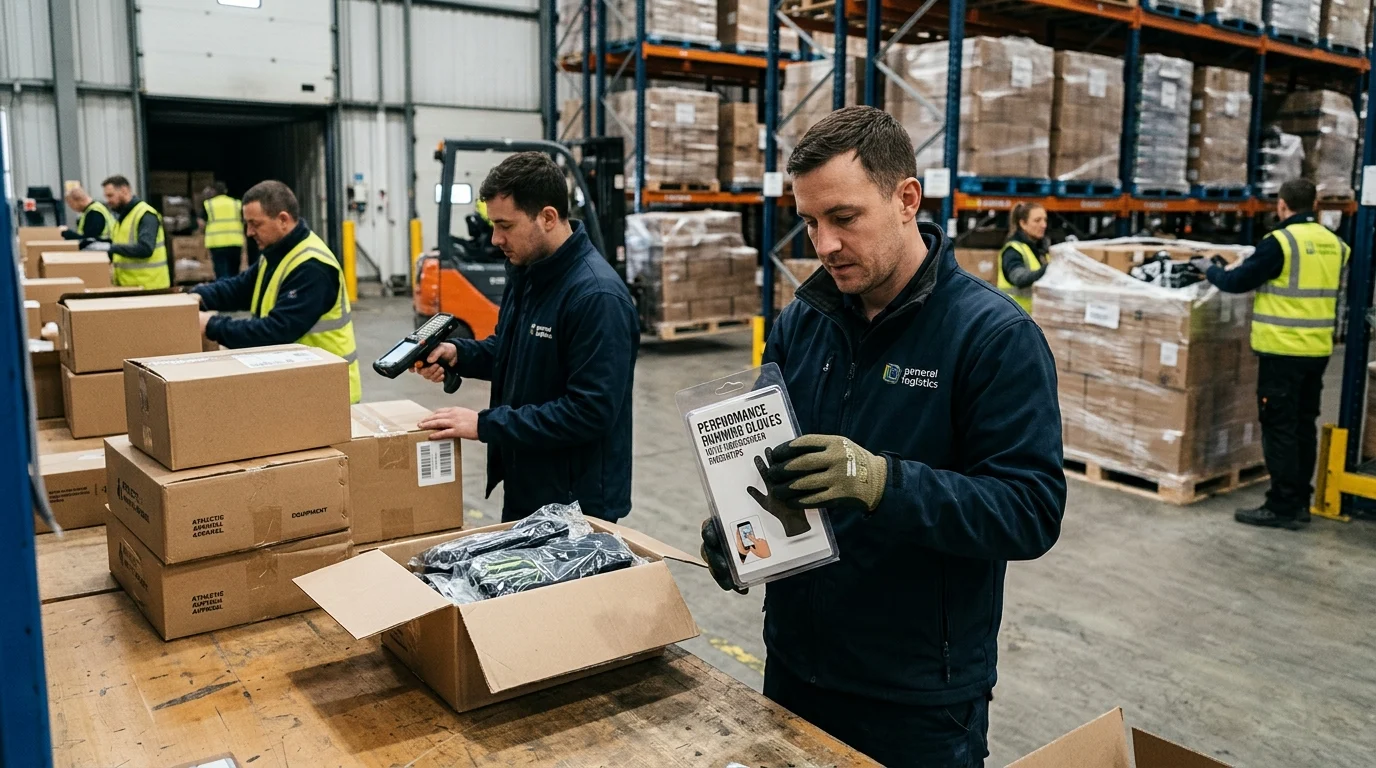
Effective qualification begins with assessing a factory’s technical infrastructure and production history. Buyers should verify that suppliers utilize fine-gauge knitting machines (typically 13-gauge to 15-gauge) capable of seamlessly integrating metallic or carbon threads without causing yarn breakage or tension inconsistencies. Prototyping is a critical phase; commercial buyers should request pre-production samples to conduct rigorous wash-testing and abrasion resistance trials simulating real-world athletic use. When integrating these specialized items into a broader portfolio of bulk electronic accessories, establishing a strict acceptable quality limit (AQL) is paramount. Industry standards generally recommend an AQL of 1.5 for major defects—such as non-functioning conductive tips or broken electrical pathways—and 2.5 for minor defects, like cosmetic stitching irregularities.
Key Takeaways
- Specify touchscreen compatibility clearly in purchase orders because roughly 75% of new athletic glove orders now include capacitive functionality.
- Prioritize conductive yarns or engineered contact zones over vague touchscreen claims to reduce return risk and user dissatisfaction.
- Test samples under the intended conditions, since cold weather, wet surfaces, and thicker insulation can reduce screen sensitivity.
- Balance conductivity with grip, warmth, moisture control, and dexterity so the product performs as sports gear first.
- Consider cross-industry demand from cycling, commuting, logistics, and tactical users when planning wholesale volumes and product variations.
Frequently Asked Questions
Why is touchscreen compatibility now important in sports gear procurement?
Athletes and commuters increasingly use smartphones, GPS apps, and wearables during activity. As a result, touchscreen functionality has shifted from a premium feature to a common specification in gloves, jackets, and armbands.
What should buyers verify before sourcing touchscreen sports gloves?
Buyers should confirm capacitive performance, material durability, grip, insulation, and wash resistance. Marketing claims alone are not enough, especially for coating-based products that may lose sensitivity faster than expected.
Which materials support touchscreen functionality?
Touchscreen-compatible gear typically uses conductive yarns, printed conductive coatings, or integrated conductive panels at contact points. Standard polyester, fleece, and nylon are generally insulating unless modified.
Can touchscreen sports gear work in cold or wet conditions?
It can, but performance may decline in extreme cold, heavy moisture, or with thick insulation. Buyers should request real-use testing that matches the intended activity and climate.
Who buys capacitive sports gear at commercial scale?
Retailers, promotional buyers, cycling brands, outdoor suppliers, logistics operators, and tactical users all source touchscreen-compatible gear for customers or workers who need device access on the move.