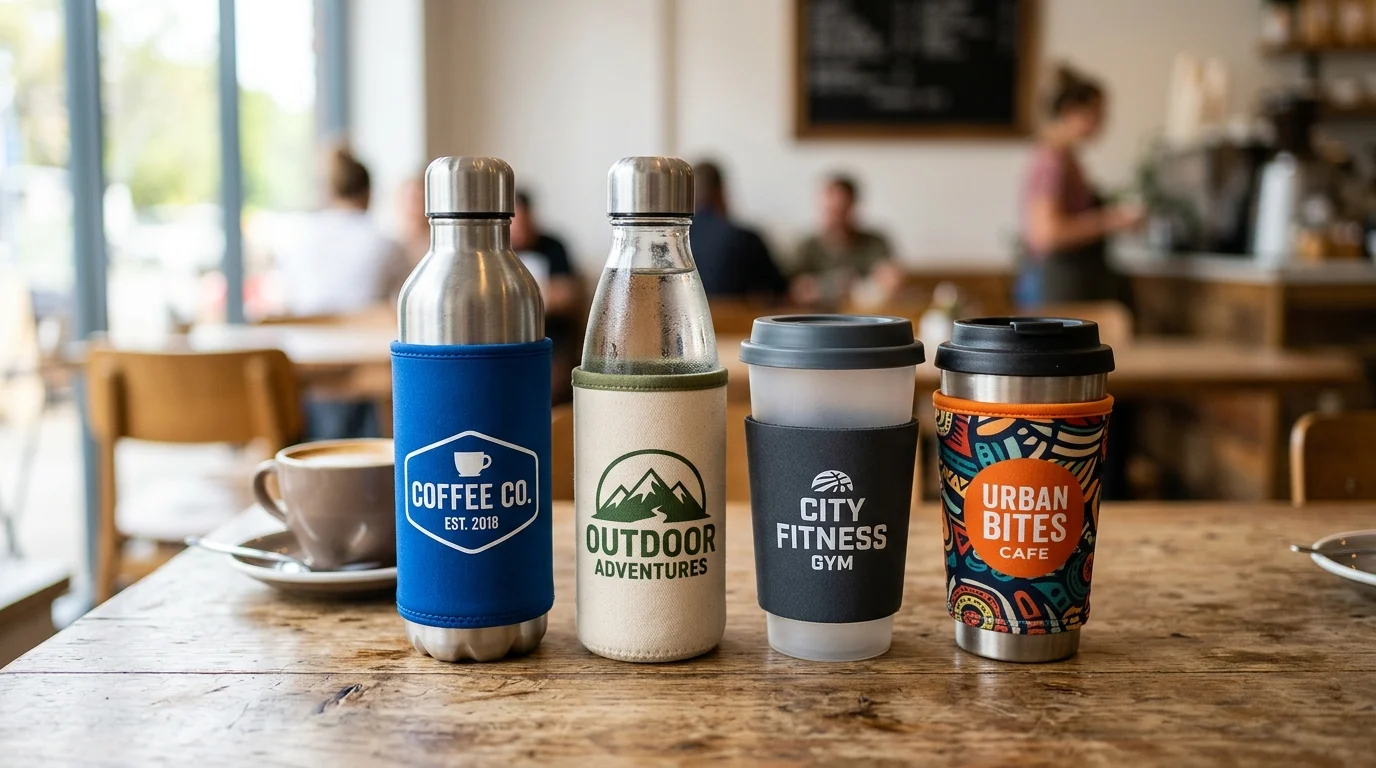
Reusable bottles and travel tumblers are now part of everyday routines, which gives marketers a practical way to earn repeated brand exposure without investing in costly custom drinkware. Branded bottle sleeves turn items people already carry into visible, functional media that can travel through offices, gyms, events, and commutes. For budget-conscious teams, the appeal is clear: a lightweight accessory can reduce distribution costs while extending campaign visibility for months. This article examines how promo sleeves work as mobile advertising, which campaign goals they support best, and how choices such as material, print method, logo placement, and audience targeting affect performance.
Cost-Effective Marketing With Promo Bottle Sleeves
Promotional merchandise strategies increasingly prioritize utility to maximize brand reach while controlling budget expenditures. As global consumer habits shift toward reusable water bottles and travel tumblers, the demand for functional accessories has surged. This trend allows marketers to transform generic hydration vessels into practical promotional tools. By integrating utility with brand messaging, organizations can achieve daily visibility across diverse environments, such as corporate offices, gyms, and public transit networks.
How Bottle Sleeves Turn Everyday Drinkware Into Brand Exposure
The core mechanism driving the efficacy of branded drinkware accessories is their physical placement in high-traffic, real-world environments. (For a contextual supplier example of these items, see these promotional bottle sleeves). Unlike stationary desk items confined to a single office cubicle, a branded sleeve travels continuously with the user. Broad market estimates suggest these items often see a 10-to-12-month lifecycle, depending on material quality and user habits.
However, they act as mobile billboards only when the branded area remains visible—not hidden in backpacks, oversized cup holders, or obscured by the user’s hand. When properly positioned, this mobility ensures that campaign messages reach secondary audiences during a daily commute or gym session. Additionally, providing a comfortable, insulated grip that manages condensation adds practical value, increasing the likelihood of daily retention.
Best Campaign Goals for Branded Bottle Sleeves
Organizations strategically deploy these gifts to achieve measurable objectives like brand awareness at industry trade shows, employee onboarding engagement, or retail point-of-sale promotions. Due to their lightweight and collapsible nature, sleeves are effective for direct-mail campaigns where shipping costs materially affect the budget. A well-executed campaign can achieve a competitive Cost Per Impression (CPI).
To illustrate, a fitness brand targeting 2,000 marathon runners might distribute 3mm neoprene sleeves in race packets. The lightweight specification keeps distribution costs low, while the audience size at the event and subsequent gym visits provides a strong platform for visibility. Marketers can effectively target both B2B clients with premium designs and B2C consumers with vibrant graphics, provided they account for edge cases like low logo contrast that could diminish readability from a distance.
| Campaign Objective | Recommended Material | Target Quantity | Branding Style | Distribution Channel |
|---|---|---|---|---|
| Mass Awareness | PU Foam | 2,500+ | 1-2 Color Screen Print | Trade Shows / Events |
| Premium B2B Gifting | Neoprene (5mm) | 500 – 1,000 | Subtle Deboss / Sublimation | Direct Mail / Onboarding |
| Eco-Conscious Promo | rPET Fabric | 1,000+ | Heat Transfer | Retail Point-of-Sale |
| Active Lifestyle | Silicone | 1,000 – 2,000 | Vibrant Pad Print | Race Packets / Gyms |
Materials, Specifications, and Customization Options
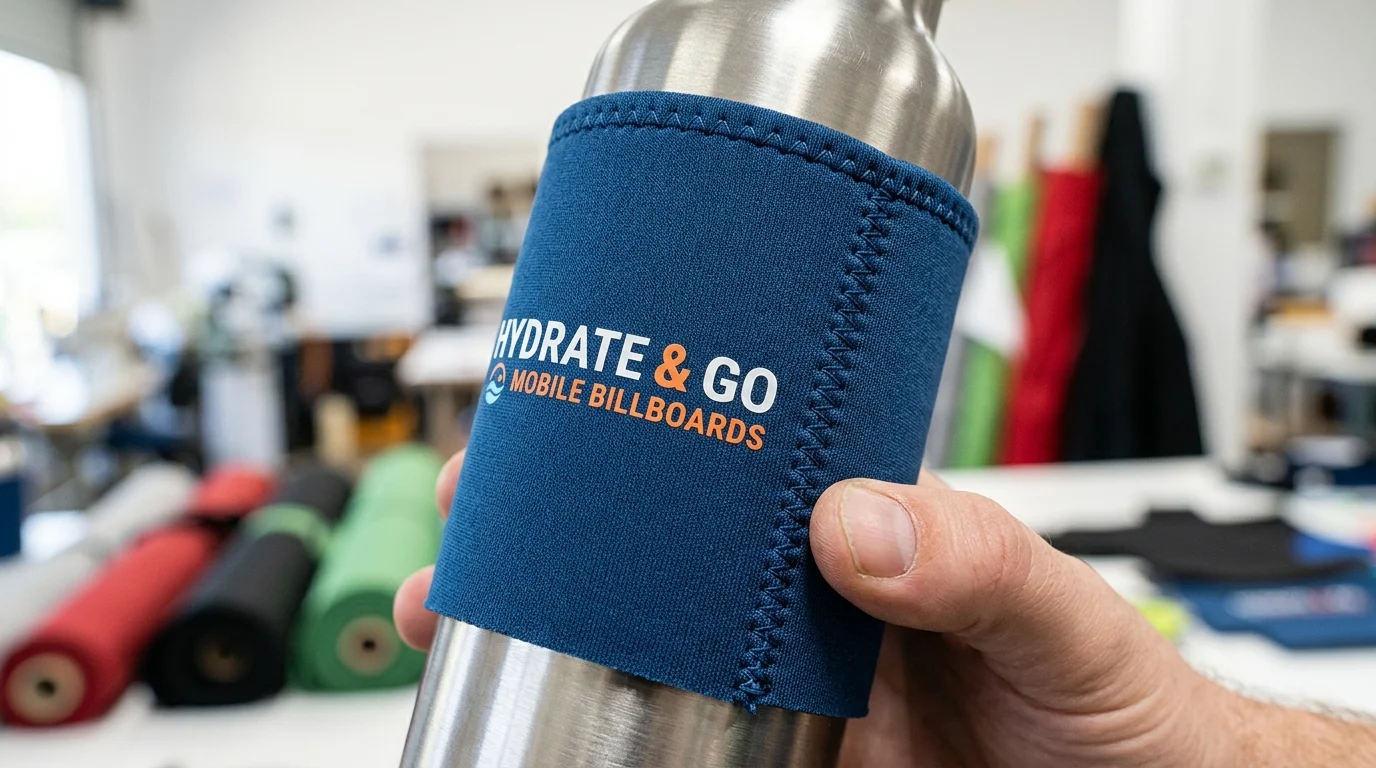
The physical characteristics and construction quality of custom printed cup covers influence both their functional performance and suitability for specific printing technologies. Selecting the correct substrate and manufacturing specifications ensures the final product aligns with the brand’s quality standards and intended use case.
Comparing Neoprene, Foam, Silicone, Fabric, and Other Materials
Navigating the material landscape requires balancing thermal insulation capabilities, elasticity, and per-unit cost. Neoprene remains the premium industry standard due to its superior closed-cell structure and durability. Polyurethane (PU) foam offers a budget-friendly alternative for large-scale distributions, while silicone and stretch fabrics cater to specialized or eco-conscious campaigns.
| Material | Standard Thickness | Insulation Rating | Ideal Print Method | Relative Cost Factor |
|---|---|---|---|---|
| Neoprene | 3mm – 5mm | High | Dye-Sublimation | Medium-High |
| PU Foam | 4mm | Moderate | Screen Print | Low |
| Silicone | 1.5mm – 2mm | Low-Moderate | Debossing / Pad Print | High |
| Spandex / rPET | 1mm | Low | Heat Transfer | Medium |
Increasingly, brands are pivoting toward sustainable options, utilizing recycled PET (rPET) derived from post-consumer plastics, which aligns corporate merchandise with modern ESG initiatives.
Print Methods, Fit Tolerances, and Durability Factors
Print methodology must be carefully matched to the selected material to guarantee graphic longevity. Dye-sublimation on neoprene allows for edge-to-edge, full-color reproduction that permanently bonds ink to the fabric fibers, resisting cracking or peeling through repeated wash cycles. Conversely, screen printing provides a cost-effective solution for bold, 1-to-2 color vector logos on PU foam.
To make customization actionable, buyers should specify exact bottle diameter ranges rather than relying on standard can dimensions. Always request physical samples to check insulation and wash performance firsthand. Furthermore, approve print placement specifically for both held and stationary visibility to ensure the logo is not obscured by the user’s hand. Proper elasticity prevents excessive stretching that could distort printed graphics or stress structural stitching.
Sourcing, Deployment, and ROI
Transitioning from design to physical distribution requires a structured approach to supply chain management. Efficient global sourcing, rigorous quality control, and strategically targeted deployment are critical to realizing the financial benefits of these promotional assets.
Procurement, Compliance, and Logistics Considerations
When procuring bulk promotional merchandise, procurement teams must navigate Minimum Order Quantities (MOQs), production timelines, and regulatory compliance. As a broad market estimate, standard offshore manufacturing for customized sleeves often requires MOQs ranging from 500 to 1,000 units, with combined production and ocean freight lead times spanning several weeks. These figures vary significantly by supplier, region, and order size. Expedited air freight can reduce transit times but heavily impacts the landed unit cost.
Furthermore, buyers must verify that materials comply with regional consumer safety standards, such as California’s Proposition 65 and the European Union’s REACH directive. Because compliance requirements vary widely by target market, end-user age, ink type, substrate, and packaging, buyers should always request Certificates of Conformity (CoCs) or official test reports from suppliers rather than assuming universal safety thresholds.
Evaluating ROI, Audience Fit, and Campaign Performance
To accurately evaluate campaign performance, marketing directors must analyze the initial capital expenditure against the target audience’s engagement metrics. With estimated raw unit costs generally ranging between $0.50 and $1.
Key Takeaways
- Choose bottle sleeve materials by campaign goal: PU foam for high-volume awareness, 5mm neoprene for premium B2B gifts, rPET for eco campaigns, and silicone for active lifestyle promotions.
- Design sleeves with high logo contrast and visible placement so the branding is not hidden by hands, backpacks, or oversized cup holders.
- Use lightweight, collapsible bottle sleeves for direct-mail or event campaigns where shipping, storage, and distribution costs affect ROI.
- Plan campaigns around real daily use environments such as offices, gyms, commutes, races, and trade shows to increase secondary audience impressions.
- Improve long-term cost per impression by selecting durable materials and printing methods that can support an estimated 10-to-12-month product lifecycle.
Frequently Asked Questions
Why are promotional bottle sleeves cost-effective?
They add branding to drinkware people already carry, creating repeated visibility without the higher cost of full custom bottles. Their lightweight, collapsible design also helps reduce event, storage, and direct-mail distribution costs.
How long can a branded bottle sleeve generate impressions?
Many bottle sleeves can remain in use for about 10 to 12 months, depending on material quality, print durability, and user habits. Better construction usually improves retention and long-term brand exposure.
Which material is best for promotional bottle sleeves?
It depends on the campaign. PU foam suits mass awareness, 5mm neoprene works well for premium gifting, rPET fabric supports eco-focused promotions, and silicone is useful for active lifestyle campaigns.
What branding method should I choose for bottle sleeves?
Screen printing is efficient for simple high-volume designs, sublimation supports full-color artwork, debossing creates a subtle premium look, and heat transfer works well on certain fabrics. Choose based on artwork complexity and audience expectations.
Are bottle sleeves suitable for direct-mail campaigns?
Yes. Because they are lightweight and often collapsible, bottle sleeves can be more economical to ship than bulkier promotional items, making them practical for onboarding kits, customer campaigns, and targeted B2B outreach.