Corporate buyers are no longer choosing materials on unit price alone. As plastic taxes, EPR rules, net-zero targets, and consumer scrutiny reshape procurement decisions, natural jute fabric is moving from a niche eco-material to a serious alternative for packaging and promotional merchandise. Unlike petroleum-based synthetics, jute is renewable, durable, breathable, and biodegradable, giving ESG teams a clearer path to reduce waste and material-related emissions. This article examines why jute is gaining ground, how it compares with polypropylene and rPET, and what procurement leaders should consider when sourcing reusable bags, branded packaging, and other corporate products at scale.
Why Natural Jute Fabric Is Replacing Synthetic Materials
Corporate procurement departments are fundamentally re-evaluating their material sourcing strategies in response to mounting environmental pressures and shifting regulatory frameworks. For decades, synthetic polymers like polypropylene, polyester, and nylon dominated industrial packaging and promotional merchandise due to their low production costs and high durability. However, the environmental toll of microplastic pollution and fossil-fuel dependency has forced a pivot toward renewable alternatives. In this landscape, natural jute fabric has emerged as a highly viable substitute, offering a practical balance of mechanical strength, rapid renewability, and verifiable sustainability that aligns seamlessly with corporate ESG procurement plans.
What Procurement Teams Should Know About Jute
Jute is a highly versatile, lignocellulosic bast fiber extracted from the bark of the white jute plant (Corchorus capsularis) and tossa jute (Corchorus olitorius). It is one of the most affordable natural fibers globally, second only to cotton in production volume, but with a significantly lower environmental footprint. The crop requires minimal pesticide or fertilizer intervention and operates on a highly efficient agricultural cycle, reaching harvest maturity in just 120 days. From an ecological standpoint, illustrative agricultural studies estimate that one hectare of jute plants can sequester up to 15 tons of carbon dioxide during its short growing season, providing strong metrics for companies tracking Scope 3 emissions.
Key ESG and Regulatory Drivers
The regulatory landscape is a primary catalyst driving the transition from synthetic materials to natural fibers. Extended Producer Responsibility (EPR) laws and stringent plastic taxation are altering the fundamental cost-benefit analysis of corporate purchasing. For instance, the UK Plastic Packaging Tax imposes a levy of over £200 per tonne on packaging that contains less than 30% recycled plastic, while similar directives across the European Union mandate drastic reductions in single-use synthetic materials. By partnering with a specialized supplier, organizations can mitigate these escalating compliance costs. Furthermore, integrating natural jute directly supports corporate net-zero pledges by eliminating petroleum-based feedstocks, making ESG procurement a strategic advantage rather than a compliance burden.
Jute vs Synthetic Materials: Buyer Comparison
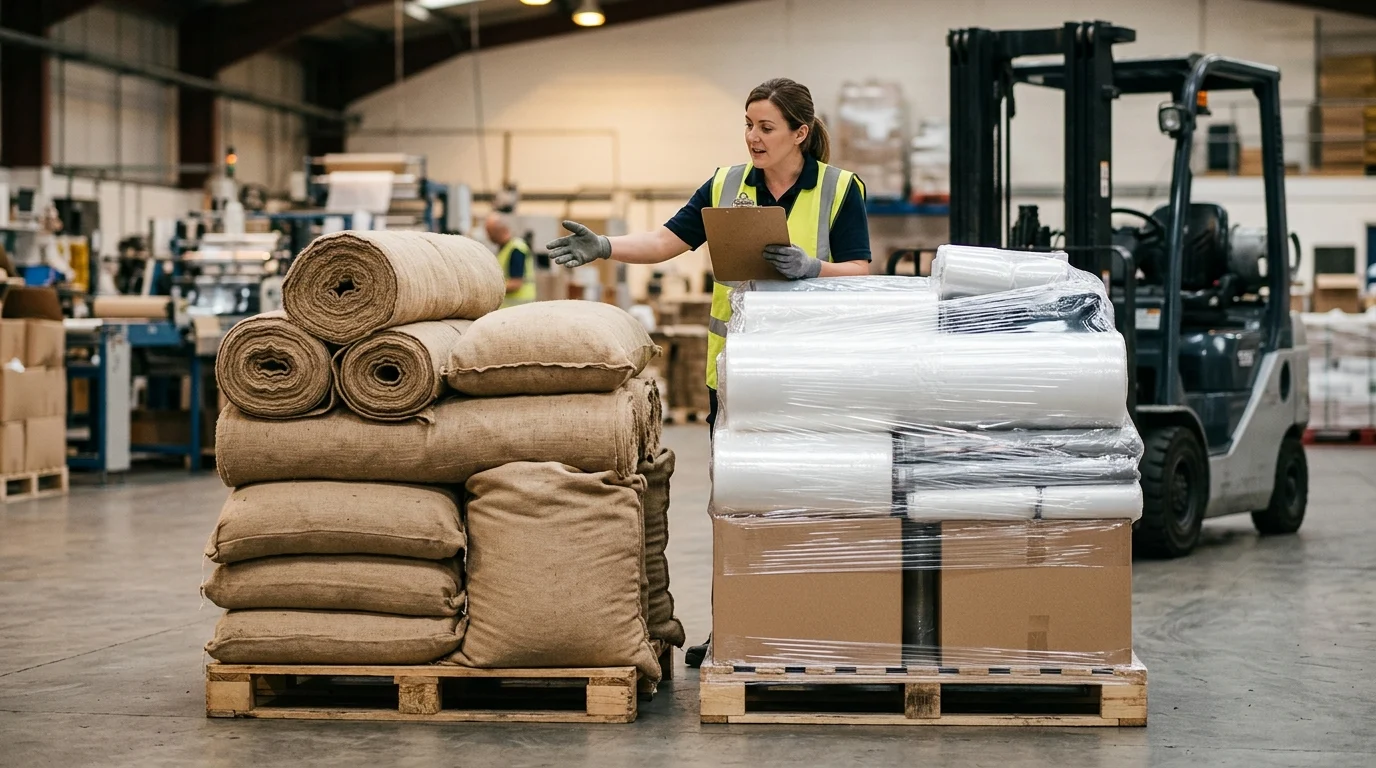
While the ecological benefits of jute are clear, rigorous comparative analyses are necessary to ensure the material meets operational requirements. Transitioning from synthetics like virgin non-woven polypropylene (PP) or recycled polyethylene terephthalate (rPET) to natural jute involves evaluating mechanical performance, unit economics, and end-of-life trajectories. Understanding these variables ensures that sustainability initiatives do not compromise product functionality or budget viability.
Performance, Cost, and Sustainability Factors
As detailed in the comparison table below, jute demonstrates superior tensile strength and breathability compared to standard synthetics, though it commands a higher initial purchase price. For example, bulk jute bags typically require a higher upfront investment than non-woven PP. However, this premium is often offset by the material’s extended lifespan and zero-waste end-of-life profile. Untreated jute achieves complete biodegradation in soil, whereas synthetic counterparts persist for centuries, fragmenting into hazardous microplastics.
| Performance Metric | Natural Jute Fabric | Non-Woven Polypropylene (PP) | Recycled PET (rPET) |
|---|---|---|---|
| Tensile Strength | High (Supports 15-20 kg; standard woven GSM) | Moderate (Supports 5-10 kg) | High (Supports 15-20 kg) |
| Unit Cost (Est. Bulk) | $1.20 – $2.50 | $0.30 – $0.80 | $0.90 – $1.80 |
| Biodegradability | Est. 12-24 months in soil | Hundreds of years (Microplastics) | Hundreds of years (Microplastics) |
| End-of-Life Pathway | 100% Compostable | Landfill / Incineration | Mechanical Recycling |
| Carbon Footprint | Low/negative at raw-material stage; moderate after processing | High (Petrochemical) | Moderate (Recycling Energy) |
Practical Trade-Offs to Consider
Despite its advantages, replacing synthetics with jute introduces specific trade-offs. Jute is subject to price volatility tied to agricultural yields, and fiber quality can be inconsistent between batches. The traditional retting process also requires significant water and energy use. In application, raw jute sheds microscopic fibers, is prone to wrinkling, and possesses a distinct natural odor derived from batching oils used during the milling process. To resolve this, specifications often require food-grade, AZO-free dyes and specialized vegetable oil treatments.
Additionally, untreated jute is highly susceptible to moisture. To achieve the water resistance inherent to plastics, jute is frequently laminated. Crucially for ESG buyers, most commercially “water-resistant” jute bags use a Low-Density Polyethylene (LDPE) lining, rendering them non-biodegradable. Procurement teams must explicitly specify starch-based or PLA (Polylactic Acid) laminates in their RFPs for promotional merchandise to maintain strict ESG compliance.
How to Add Jute to ESG Procurement
Adding jute to an established supply chain requires careful vendor selection and category management. Because natural fiber production is heavily concentrated in specific geographic regions—primarily the Bengal Delta in India and Bangladesh—supply chain dynamics differ significantly from the highly distributed manufacturing networks of synthetic plastics. Success depends on rigorous supplier vetting and strategic product allocation.
Sourcing and Supplier Evaluation Steps
Evaluating a manufacturing partner requires looking beyond basic product specifications to assess labor practices and quality control. Factory audits such as SA8000 or Sedex SMETA are essential to ensure ethical labor standards are maintained throughout the labor-intensive harvesting and weaving phases. From a logistical standpoint, industry averages suggest Minimum Order Quantities (MOQs) typically range from 500 to 2,000 units for custom-dyed jute products. Lead times also require careful forecasting; ocean freight from primary manufacturing hubs in South Asia or specialized finishing facilities in China generally necessitates an estimated 30 to 45-day transit window, requiring seasonal orders to be finalized well in advance of internal deadlines.
When to Choose Jute Over Synthetic Options
While synthetics still dominate certain industrial applications, jute is rapidly overtaking them in categories where a premium, organic aesthetic directly reinforces a brand’s sustainability narrative. It is the optimal choice for corporate gifts, premium agricultural packaging (such as coffee or root vegetables), and high-durability retail totes.
Conversely, synthetic materials often remain the more practical choice for high-moisture environments where bio-lamination is unfeasible, ultra-low-budget high-volume giveaways, or applications requiring extreme heat resistance.
Key Takeaways
- Procurement teams should evaluate jute as a renewable alternative to polypropylene, polyester, and nylon because it reduces petroleum dependency and microplastic risk.
- Jute can reach harvest maturity in about 120 days, making it a fast-renewing fiber for companies seeking lower-impact material sourcing.
- A hectare of jute may sequester up to 15 tons of carbon dioxide during its growing season, which can support Scope 3 emissions reporting.
- Companies selling into regulated markets should factor plastic taxes and EPR rules into material decisions, as synthetics may carry rising compliance costs.
- Although jute may cost more upfront than non-woven PP, buyers should compare total value across durability, reuse potential, brand perception, and end-of-life impact.
- For branded packaging or promotional campaigns, businesses should work with specialized bulk jute suppliers to ensure customization, quality, and ESG alignment.
Frequently Asked Questions
Why are companies replacing synthetic materials with jute in ESG procurement?
Jute helps reduce reliance on petroleum-based materials, avoids microplastic pollution, and supports biodegradability goals. It also offers strong durability for packaging and promotional products, making it practical for procurement teams balancing sustainability, compliance, and product performance.
Is natural jute fabric biodegradable?
Yes. Untreated jute is a natural plant fiber that can biodegrade in soil, unlike polypropylene, polyester, or nylon, which can persist for decades or centuries and break down into microplastics.
How does jute support corporate Scope 3 emissions goals?
Jute is renewable, grows quickly, and can sequester carbon during cultivation. Because it replaces fossil-fuel-derived synthetics in purchased goods, it can help procurement teams lower emissions linked to supply chains and product materials.
Is jute more expensive than non-woven polypropylene?
Jute usually has a higher upfront unit cost than non-woven polypropylene, but its durability, reusable value, biodegradability, and lower regulatory risk can improve long-term procurement value.
What types of corporate products can use jute fabric?
Jute is commonly used for reusable shopping bags, grocery bags, gift packaging, trade show bags, promotional merchandise, and retail packaging where durability and a natural sustainability message are important.