Event giveaways are no longer judged only by price and logo visibility; they are increasingly measured against sustainability targets, attendee usefulness, and waste reduction. As procurement teams look for branded products that align with CSR commitments, recycled-material merchandise is moving from niche to standard. Portable RPET folding fans are gaining attention because they combine immediate comfort at hot, crowded venues with a tangible circular-economy story: post-consumer plastic bottles transformed into a reusable promotional item. This article explains what makes these fans different, how they compare with paper or virgin plastic alternatives, and why brands are using them to improve both event experience and environmental credibility.
Why Brands Choose Promotional Portable RPET Spanish Fans
The landscape of corporate event marketing has shifted decisively toward environmentally responsible procurement. As organizations align their marketing strategies with broader corporate social responsibility (CSR) mandates, the demand for sustainable merchandise has surged. Among the most effective and functional items gaining traction in warm-weather climates and crowded venues are folding fans—specifically those manufactured from recycled materials.
What RPET Spanish Fans Are
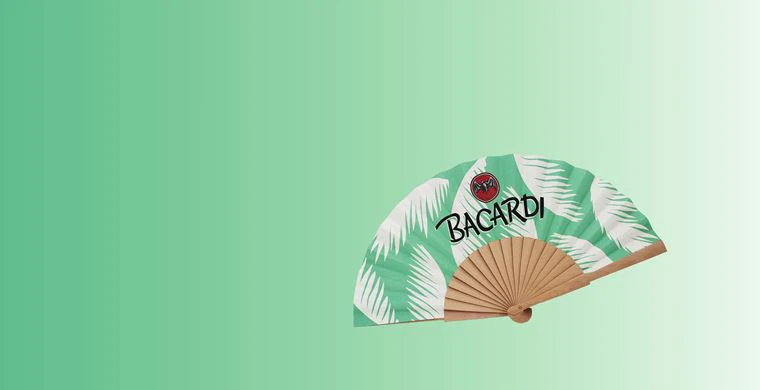
To understand the value of Promotional Portable RPET Spanish Fans, buyers must first examine the core material. RPET stands for Recycled Polyethylene Terephthalate, a durable textile woven from processed post-consumer plastic water bottles. The traditional “Spanish fan” design features a collapsible structure comprising rigid ribs and a flexible fabric leaf.
In RPET variants, the fabric leaf is entirely synthetic but ecologically derived. Manufacturing a standard-sized fan typically diverts one to two 500ml PET plastic bottles from landfills or oceans. When paired with sustainable rib materials—such as rapidly renewable bamboo or recycled polypropylene (rPP)—these fans offer a closed-loop or highly sustainable product architecture. This combination maintains the classic, elegant folding mechanism while minimizing virgin plastic consumption and supporting circular economy initiatives.
Why Sustainable Event Giveaways Appeal to Brands
Procurement teams are prioritizing sustainable event giveaways because they directly influence brand perception and event waste metrics. Traditional promotional items often suffer from a short lifespan, contributing to the millions of tons of waste generated by the global events industry annually. Modern attendees, particularly millennials and Gen Z professionals, actively scrutinize corporate waste, making eco-conscious merchandise a strategic necessity rather than a mere preference.
Data indicates that utilizing recycled polyester requires approximately 59% less energy and reduces greenhouse gas emissions by up to 79% compared to virgin polyester production. Furthermore, distributing high-utility items like portable fans at summer festivals, trade shows, or outdoor corporate retreats ensures immediate practical use. This high retention rate translates to a significantly lower cost-per-impression (CPI), as attendees are highly likely to keep a durable, functional fan for months or even years after the event concludes.
How RPET Spanish Fans Compare on Sustainability
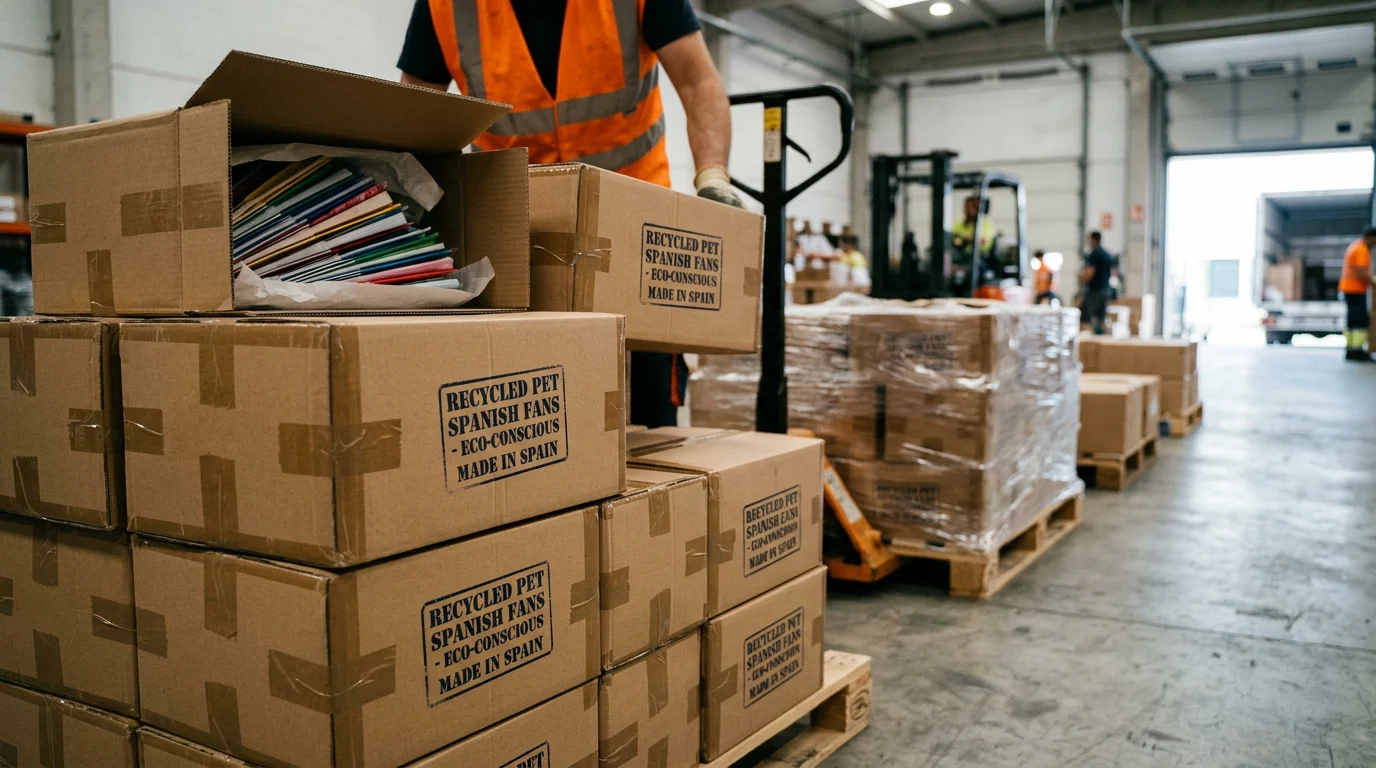
Evaluating the environmental footprint of promotional merchandise requires comparing lifecycle data, durability, and end-of-life disposal. Measured against conventional alternatives, RPET-based hand fans demonstrate clear advantages in both ecological impact and long-term brand visibility.
RPET Fans vs Paper Fans
Historically, event organizers relied on cheap paper fans or virgin plastic alternatives to manage tight marketing budgets. While paper is theoretically biodegradable, standard promotional paper fans are highly susceptible to moisture, tearing, and crushing in crowded event spaces. Their average functional lifespan is often limited to a single one- to three-day event, after which they are discarded. In contrast, custom RPET folding fans offer robust tear resistance and water-repellent properties, ensuring they survive transit, regular use, and long-term storage.
| Metric | Paper Hand Fans | Virgin Polyester Fans | RPET Spanish Fans |
|---|---|---|---|
| Average Lifespan | 1–3 Days | 1–3 Years | 1–3 Years |
| Recycled Content | Varies (0–100%) | 0% | 100% (Fabric) |
| Durability | Low (Tears easily) | High | High |
| Carbon Footprint | Moderate | High | Low (compared to virgin polyester) |
By shifting investment from disposable paper goods to durable RPET, brands effectively reduce the volume of promotional waste left behind at event venues while extending the active lifecycle of their marketing spend.
Key Specifications and Certifications
For a procurement campaign to be genuinely sustainable, the products must meet strict manufacturing specifications and carry verifiable certifications. Standard RPET Spanish fans typically feature a closed length of 23 centimeters and expand to a 42-centimeter open span, providing an optimal surface area for cooling and prominent logo placement. The fabric is usually specified as 190T or 210D RPET, denoting a tight, durable weave that easily accepts high-resolution commercial printing.
Corporate buyers must mandate that suppliers provide Global Recycled Standard (GRS) certification. The GRS verifies the exact percentage of recycled content, tracks the chain of custody from the recycling facility to the final product, and ensures adherence to strict social and environmental practices during production. Additionally, confirming that the inks used are OEKO-TEX certified guarantees that the final product is free from harmful substances, further solidifying the campaign’s eco-conscious claims and protecting end-users.
How to Source and Plan RPET Spanish Fan Campaigns
Executing a successful promotional campaign requires strategic sourcing, clear timelines, and a comprehensive understanding of manufacturing capabilities. Navigating the supply chain for B2B promotional merchandise demands careful attention to vendor vetting, technical specifications, and logistical planning.
Supplier and Procurement Steps
The procurement lifecycle for eco-friendly promotional gifts begins with rigorous supplier qualification. Corporate buyers should request physical samples to assess the tension of the folding mechanism, the smoothness of the ribs, and the tactile quality of the RPET fabric. Once a vendor is vetted via GRS documentation and quality checks, the mass production timeline must be mapped out accurately to align with event dates.
Minimum Order Quantities (MOQs) for fully customized RPET fans generally range from 500 to 1,000 units, making them accessible for mid-sized corporate gatherings to large-scale conventions. Production lead times typically span 15 to 25 days, depending on the complexity of the print and the sourcing of specific rib materials. Buyers must also factor in logistics; ocean freight can add 25 to 35 days to the delivery schedule, whereas air freight expedites delivery to 7 to 10 days but significantly increases both the carbon footprint and the landed unit cost.
Decision Criteria for Sustainable Giveaways
When finalizing the specifications for a campaign, cost and printing methodology are the primary decision criteria. Standard unit costs for RPET Spanish fans fluctuate between $1.50 and $3.00, heavily influenced by the order volume and the choice of rib material. For instance, polished, sustainable bamboo ribs generally command a premium over recycled plastic ribs, but they elevate the perceived value of the giveaway.
For branding, dye-sublimation is a highly effective printing
Key Takeaways
- Choose RPET Spanish fans for warm-weather events because they provide immediate attendee comfort while supporting measurable sustainability goals.
- Use RPET fan messaging to highlight that each standard fan can repurpose roughly one to two 500ml PET bottles.
- Prioritize durable RPET fans over paper fans when you need giveaways that can survive transit, moisture, and repeated use.
- Pair RPET fabric with bamboo or recycled polypropylene ribs to reduce virgin plastic use across more of the product structure.
- Position reusable fans as lower-waste promotional items because their longer lifespan can improve retention and cost-per-impression.
Frequently Asked Questions
What are RPET Spanish fans made from?
They use RPET fabric, a recycled polyester made from post-consumer PET plastic bottles, often paired with bamboo or recycled plastic ribs for a more sustainable folding fan structure.
Why are brands choosing RPET fans for events?
Brands choose them because they are practical in warm venues, reduce reliance on virgin materials, support CSR goals, and are more likely to be kept and reused than disposable giveaways.
How many plastic bottles can one RPET fan help divert?
A standard-sized RPET fan typically uses material equivalent to about one to two 500ml PET plastic bottles, helping redirect plastic waste into a useful promotional product.
Are RPET Spanish fans better than paper fans?
For most events, yes. Paper fans are often damaged within one to three days, while RPET folding fans are more tear-resistant, water-repellent, and suitable for longer-term use.
Do RPET fans help reduce promotional waste?
Yes. Their durability and usefulness can extend product life beyond a single event, lowering disposal rates and improving the value of each branded impression.