Summer campaigns succeed when the giveaway feels useful in the exact moment people receive it. That is why compact, rechargeable mini fans have become a strong option for brands planning outdoor activations, festivals, tradeshows, and warm-weather retail promotions. Unlike throwaway novelties, today’s models can feature lithium-ion batteries, USB charging, multiple form factors, and custom branding that recipients may carry throughout the season. For marketers, the appeal is practical: a cooling device can attract booth traffic, encourage opt-ins, and generate repeated logo exposure. This article explains how to evaluate fan types, order quantities, battery specs, customization methods, and campaign use cases so your promotional spend works harder.
Why Wholesale Mini Fans Work for Promotions
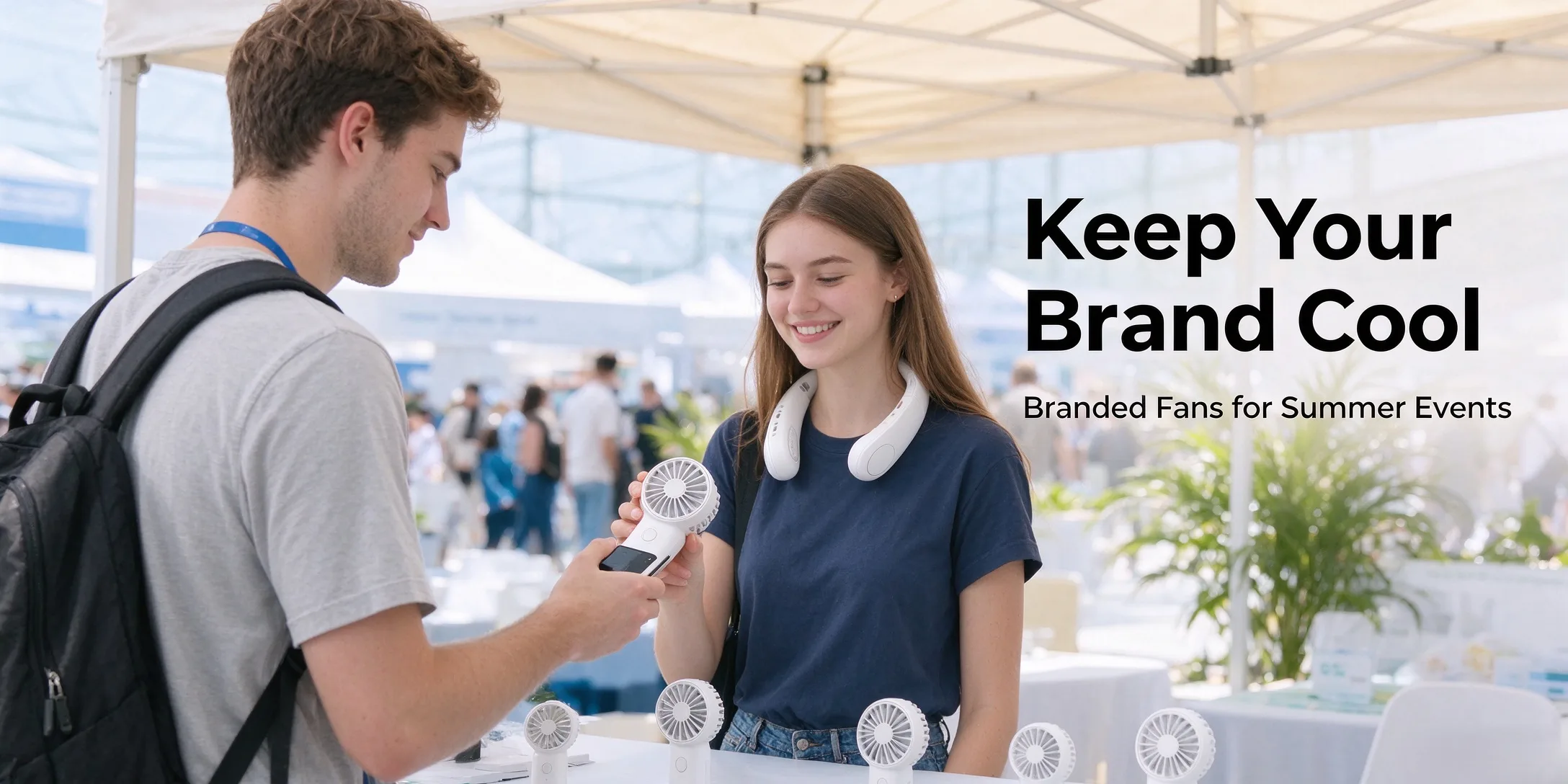
When summer event season kicks into high gear, marketing campaigns need items that directly solve the challenge of keeping attendees comfortable. Mini fans offer immediate, tangible relief in hot environments, which can increase brand recall when distributed at high-traffic outdoor events. This functional value is why tech-focused promotional items are highly effective for warm-weather activations, providing sustained visibility as attendees retain them for extended periods.
What Are Wholesale Mini Fans

Today’s portable mini fans are a far cry from the flimsy, AA-battery-guzzling plastic toys of the past. Modern units are sleek, USB-rechargeable devices equipped with lithium-ion batteries—typically ranging from 1,200mAh to a robust 4,000mAh, though capacities can vary based on regional manufacturing standards. In the wholesale market, these devices are designed for bulk customization, allowing brands to apply logos via pad printing or laser engraving across large production runs. Minimum order quantities (MOQs) typically start around 500 to 1,000 units, making them scalable for major campaigns. They come in various ergonomic form factors, including traditional handheld wands, foldable desk units that double as power banks, and hands-free wearable neck fans. When selecting models, note that charging port types—specifically modern USB-C versus older Micro-USB—significantly affect daily convenience and the perceived premium value of the gift. Because they are highly portable, recipients frequently carry them in their everyday bags throughout the summer season.
Which Campaign Goals Do They Support
These fans support a wide variety of campaign goals, particularly for clients aiming to drive brand visibility and lead generation. For example, marketers can effectively capture leads by offering a premium fan in exchange for an email opt-in or by printing a QR code on the packaging that directs users to a digital landing page. Compared to other promotional electronics like power banks or earbuds, mini fans can offer a competitive cost-per-impression during the summer months while delivering immediate, visible relief. Differentiated use cases allow for precise audience segmentation: basic handhelds suit mass giveaways at outdoor summer music festivals, while premium wearable neck fans serve as excellent VIP gifts at crowded indoor tradeshows. However, keep user-experience caveats in mind; neck fans can sometimes be noisy or ergonomically divisive depending on the wearer. Ultimately, offering a functional, cooling giveaway helps drive booth engagement as attendees approach to grab a branded item.
Key Specs, Costs, and Compliance Checks
Understanding the technical specifications of a mini fan is where promotional campaigns either succeed or fail. Thoroughly understanding hardware specifications prevents costly recalls and ensures you are distributing a safe, reliable product. Let’s break down the numbers and features buyers need to monitor.
How to Compare Fan Types
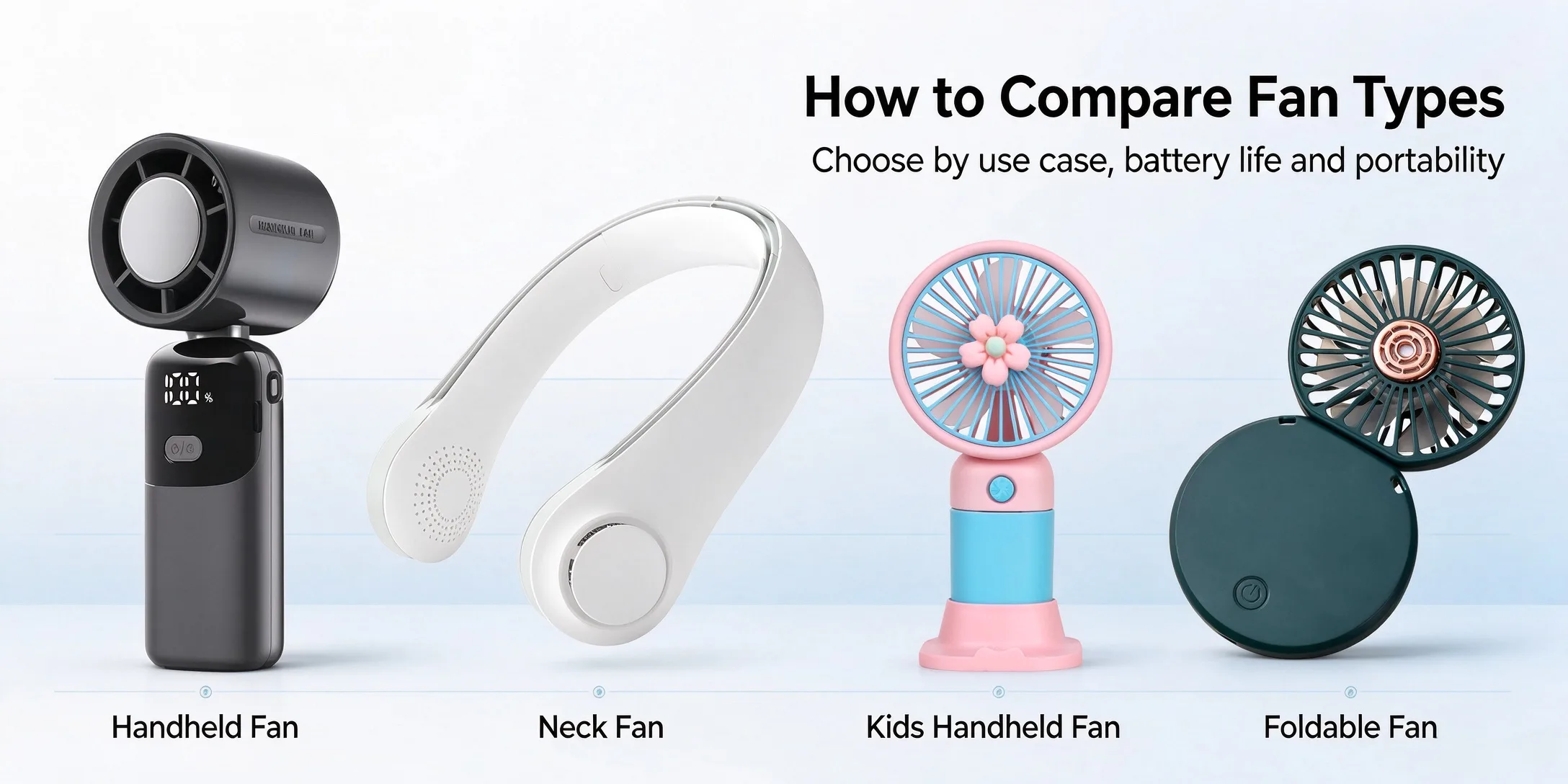
When comparing wholesale mini fans, carefully balance battery capacity, expected run time, and per-unit cost. The housing material also matters—durable ABS plastic is recommended over cheaper alternatives. However, buyers should note that ABS can be susceptible to logo wear over time. To ensure branding quality, select the appropriate decoration method—such as pad printing for curved surfaces, UV printing for full-color logos, or laser engraving on metal accents—while keeping in mind that printable areas are often constrained by the fan’s grilles and ergonomic curves. Here is a quick breakdown of common styles (note that costs and lead times represent typical supplier ranges and remain subject to seasonal price volatility):
| Fan Style | Typical Battery (mAh) | Run Time (Hours) | Est. Cost Band (USD, 1k MOQ) |
|---|---|---|---|
| Basic Handheld | 1,200 – 2,000 | 2 – 4 | $1.50 – $2.80 |
| Foldable Desk/Hand | 2,000 – 2,500 | 3 – 6 | $2.50 – $4.00 |
| Wearable Neck Fan | 3,000 – 4,000 | 4 – 10 | $4.50 – $7.50 |
Selecting the right model depends entirely on your marketing budget and the perceived premium value you want to offer your recipients.
Which Features Affect Cost and Safety
Cost is not just about the exterior shell; internal electronic components dictate both the price and the safety of the device. The battery is the most critical factor. Using certified 18650 lithium-ion cells is essential, as uncertified batteries pose a severe fire hazard and brand liability. Additionally, corporate sustainability policies should account for end-of-life battery disposal when distributing electronic goods. The motor is also key: brushless DC motors are the industry standard because they operate quietly (generally under 40 decibels for quality builds) and last significantly longer than brushed alternatives.
To ensure safety and market compliance, verify that production batches carry the appropriate region-dependent certifications. Standards like CE, FCC, and RoHS apply universally to the device, while UKCA (for the UK) or PSE (for Japan) may be required depending on the destination. Crucially, buyers must disentangle battery and function-specific standards: UN38.3 is required specifically for battery transport, whereas UL2056 applies only to models that feature power-bank functionality, not standard fans. Buyers must remain vigilant against counterfeit certifications by requesting verifiable test reports from reputable labs. Maintaining strict control over these specifications and conducting aging tests helps maintain a minimal defect rate.
How to Source and Ship Wholesale Mini Fans
Sourcing electronics from overseas requires familiarity with the manufacturing process. However, with a well-organized production workflow, transparent, documented communication, and the right logistics partner, it is highly manageable and effective at improving marketing ROI.
What Sourcing Workflow Should Buyers Follow
Buyers should follow a strict, milestone-based timeline to avoid production delays. First, never skip the pre-production sample (PPS). This phase generally takes about 7 to 10 days and is crucial for verifying logo placement, PMS color matching, and overall build quality. Once the sample is approved, mass production usually requires 20 to 30 days, depending on the minimum order quantity and factory capacity. Note that these production and shipping timelines are representative averages; they can shift due to factory load, port congestion, or regional holidays. Before anything leaves the factory floor, a third-party quality inspection using AQL 2.5/4.0 standards is highly recommended.
Key Takeaways
- Choose mini fans for summer campaigns when your audience needs immediate comfort at outdoor events, festivals, tradeshows, or high-traffic activations.
- Plan bulk orders around typical MOQs of 500 to 1,000 units and confirm customization options before finalizing the campaign budget.
- Compare battery capacity, run time, charging port type, and material quality because these details directly affect user satisfaction and perceived value.
- Use basic handheld fans for mass giveaways and reserve wearable neck fans or foldable desk models for VIP audiences or higher-value engagements.
- Add QR codes, opt-in offers, or campaign landing pages to packaging to turn a practical branded gift into a measurable lead-generation tool.
Frequently Asked Questions
What makes mini fans effective summer promotional gifts?
They solve an immediate seasonal problem: heat. At outdoor events, festivals, and tradeshows, a branded mini fan delivers practical relief while keeping your logo visible during repeated use.
What is the typical MOQ for wholesale mini fans?
Minimum order quantities often start around 500 to 1,000 units, depending on the model, customization method, and supplier requirements.
Which mini fan styles work best for promotions?
Handheld fans suit mass giveaways, foldable desk fans work well for office or travel campaigns, and wearable neck fans can be positioned as premium or VIP gifts.
Can mini fans be customized with a logo?
Yes. Common branding methods include pad printing and laser engraving, with placement depending on the fan’s shape, material, and available imprint area.
What battery capacity should buyers look for?
Many modern USB-rechargeable mini fans use lithium-ion batteries from about 1,200mAh to 4,000mAh. Higher capacity usually supports longer run time but may increase unit cost.